


Offices, shops and communal areas
Clean premises are the first thing your customers notice — and the first thing your residents call about when they are not.
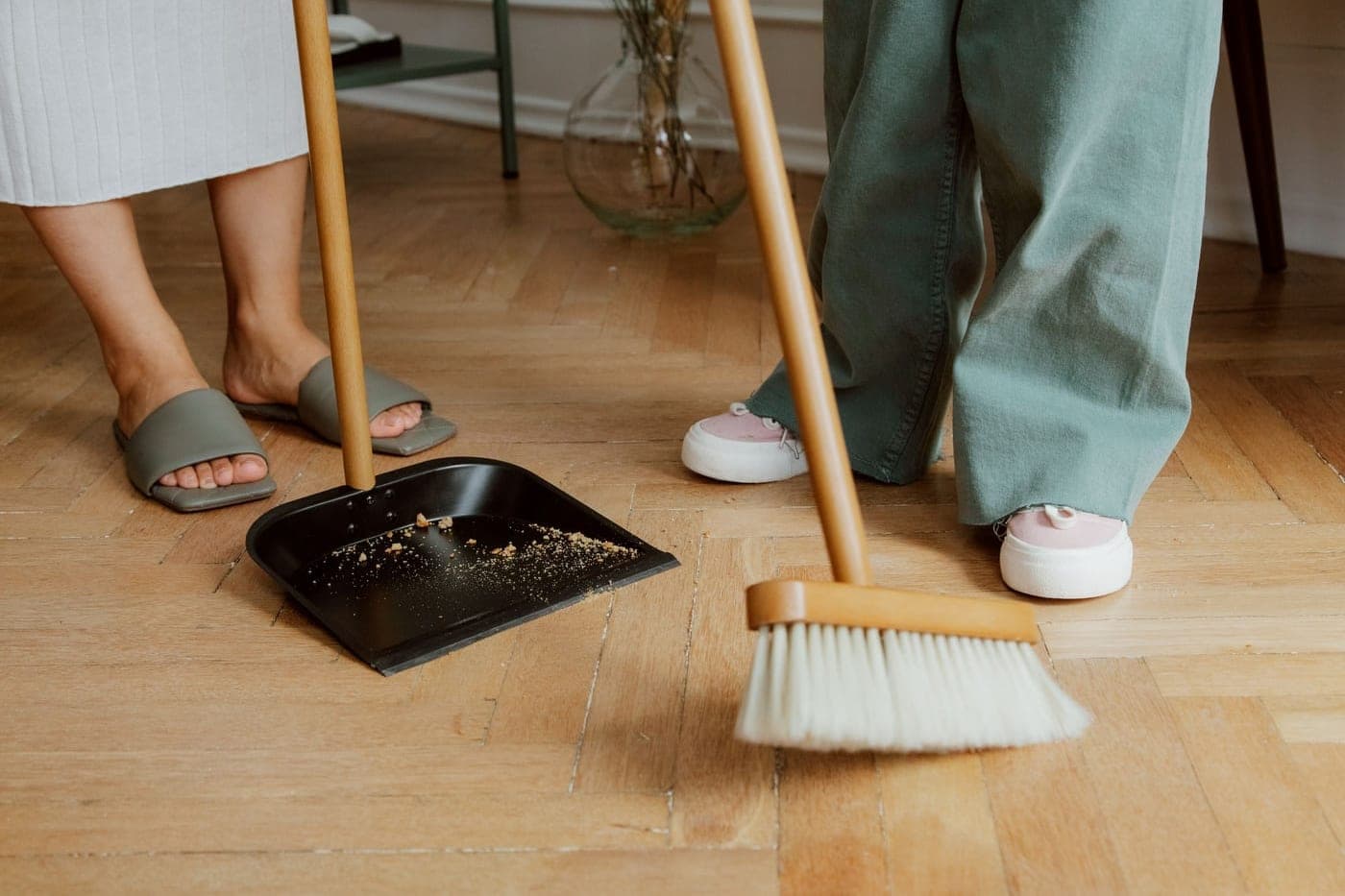
A visit nobody notices
Cleaning business premises comes down to timing and consistency. A consulting room opens at eight, so the visit happens before that or the evening before. A shop closes on Mondays: the ideal day for a thorough floor treatment. An open-plan agency often prefers three short visits a week to one long Friday session. The contract fits your rhythm, not the reverse.
Communal areas follow another logic: entrance halls, stairs, lifts, bin stores and surroundings have to hold up for a whole week. The managing agent or the residents' committee sets the frequency, the work is written down in black and white, and the same person comes back — which is what stops the complaints and the reminders.
Three one-off services complete the family. Post-construction cleaning turns premises handed over bare into somewhere fit to occupy: fine rubble, glue marks, windows, brand-new sanitary ware nobody has ever used. Holiday lets and short-term rentals need a fast turnaround between guests, with linen changed and everything put back exactly as it was. Light vehicle fleets can also be cleaned inside and out.
Businesses: frequent questions
Do you work outside opening hours?
Yes, and that is the usual case. Early morning, end of day, the weekly closing day or the weekend: the slot is written into the contract. It does require independent access — a key, a badge or a code — under conditions agreed in writing before the first visit.
How does a regular contract work?
We agree together on the frequency, the length of each visit and the precise list of what is covered. That list is the reference for the whole contract: it prevents any misunderstanding about scope. It can be revised if your activity changes — a new office, extra floor space, Sunday opening.
Do you clean new premises after the builders leave?
Yes, on surfaces that stay within human scale: a shop, a consulting room, an office floor, a delivered flat. Work starts once the trades have gone and the heavy rubble has been removed. Water and electricity need to be connected: without them, new premises simply cannot be cleaned.
Premises to show before signing?
I come and look at the floor area and the access constraints, then propose a frequency and a price per visit.