


Gardening
A garden is not rescued in one go: it is kept. Four families, from the Saturday mow to stump removal.
The Toulouse climate sets the calendar
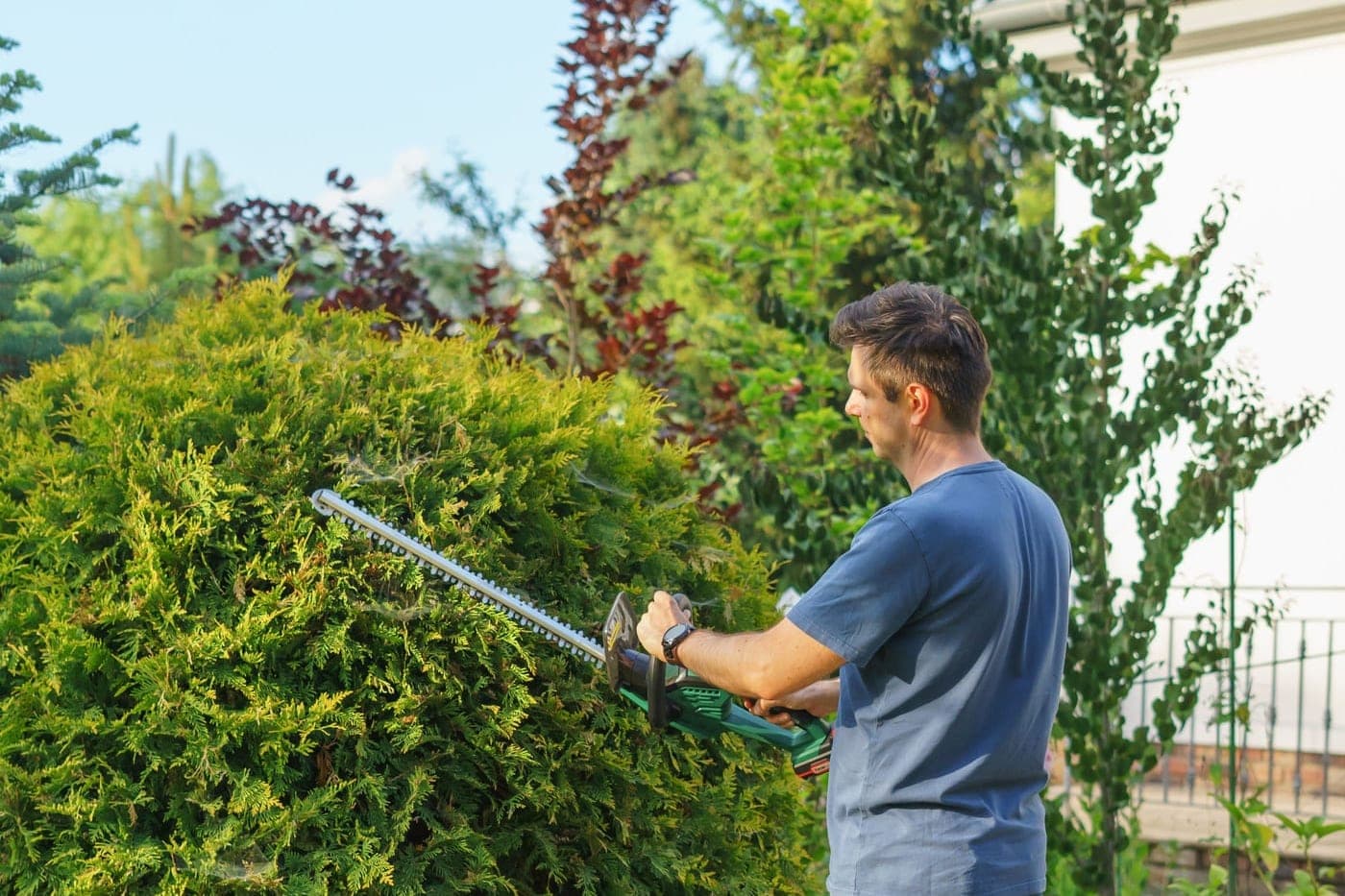
Here the grass races in spring, stops dead in July and starts again in September. Thuja and laurel hedges need two cuts a year to stay dense, fruit trees are pruned outside frost, and beds are weeded while the soil is still soft. Upkeep built around those rhythms costs less than an annual rescue, simply because the volume of green waste to remove is nothing alike.
The four families below follow that logic: what comes back regularly, what is created once, what needs strength and machinery, and what happens on fixed dates in the year.
Four garden chapters
Garden upkeep
Mowing with removal, clearing, hedge and shrub trimming, fruit tree pruning, weeding, leaves, scarifying.
Planting and landscaping
Seeded or turfed lawns, hedges and beds, mulching, edging, fencing, screening, gravel and slabs.
Felling and ground clearance
Stump removal, felling small trees, green waste disposal, clearing ground before or after building work.
Through the seasons
Opening and closing the garden, upkeep while you are away, watering, snow clearing and gritting in winter.
Gardens: starting questions
What happens to the green waste?
It is loaded and taken to the recycling centre, clippings, branches and leaves included. It is a separate line on the quotation because the volume varies enormously: twenty metres of hedge cut after two years untouched fills several trailer loads, where a weekly mow fits in one bag.
Do I need an annual contract?
No, nothing obliges you to commit. Many clients start with a one-off rescue then move to regular visits once they see the garden holding better. Equally, a single tidy-up before the family arrives in August is a perfectly reasonable request.
Do you work for residential blocks and estates?
Yes, on green spaces of ordinary scale: lawns, boundary hedges, beds, paths. Visits are arranged with the managing agent or the residents' committee, at a frequency matched to the season — closer together from April to June, further apart in high summer.
What area, what hedge height?
Those two figures, plus the date of the last visit, are already enough to estimate the working day.